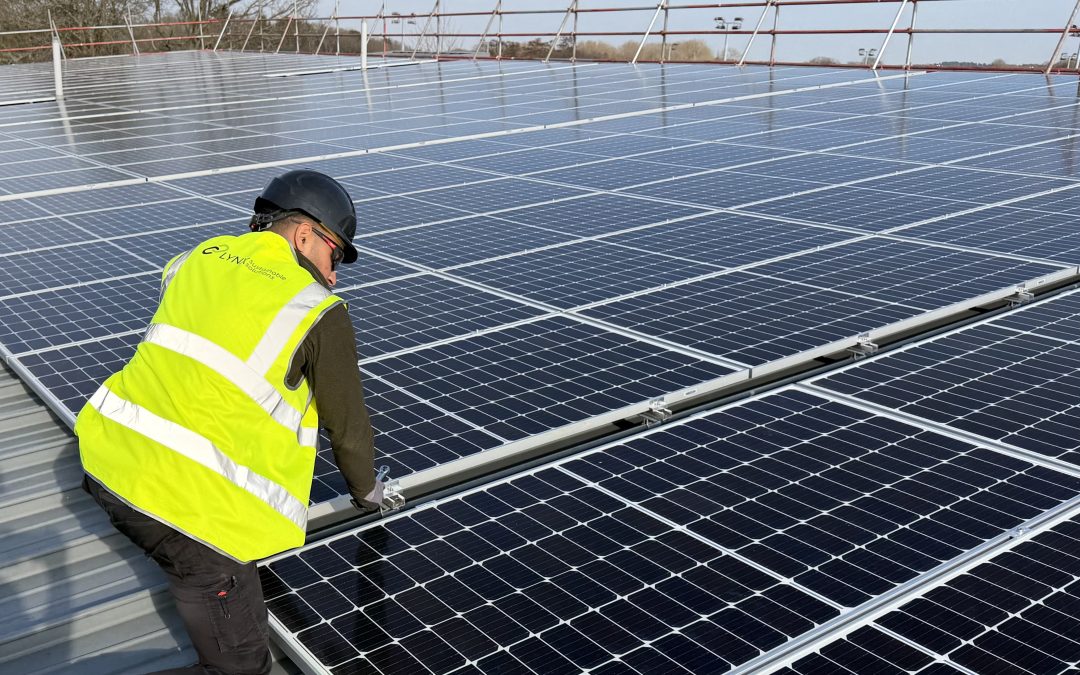
The difference between a commercial solar project that runs well and one that does not usually comes down to preparation. The decisions that matter are made long before any kit arrives on site, in the design stage, in the planning conversations, and in the questions asked early enough to make a difference. Niall Russell is a Project Manager at Lynx Sustainable Solutions, and in this article, he shares what good preparation looks like in practice.
Most of what separates a smooth installation from a difficult one comes down to preparation and communication. These are five considerations our team works through to make sure projects run to plan.
Think about year 25, not just year one
A commercial solar system is designed to last at least 25 years, and the decisions made before and during installation determine whether it can be maintained for that long. It is easy to focus on getting the system in and generating and not think carefully enough about what comes after.
Roof light covers and permanent edge protection are not optional extras as without them, getting back onto a roof safely to carry out annual checks or fix a fault becomes a much bigger job than it needs to be. Panel layout matters too. If there is not enough room to move around the roof between rows, maintenance becomes difficult and, in some cases, unsafe. Ground-mounted systems have their own considerations. Soil corrosivity, for example, can affect what mounting system you need and what warranty you can get. If that is not picked up before installation, it can cause problems that are expensive to resolve.
Any installer you work with should be sharing how that system should operate and be maintained for years to come.
A great supply chain is only as reliable as great preparation
Equipment does not always arrive when promised. That is not unique to solar, as many sectors use just-in-time inventory management. Still, the consequences for an installation programme can be significant, particularly when you are working to a fixed crane lift or a tight time window on an occupied site.
Good supply chain management starts with good design. Without a detailed design before you get to the site, you cannot order the right materials with enough lead time. Some items, such as bespoke trunking, specific fixings, and anything with a special coating or finish, are not off-the-shelf purchases. They can have lead times of several weeks. If that is not accounted for early enough, it will catch you out.
We also have a carefully selected supply chain built on relationships we know and trust, and that trust goes both ways, as we are a good client who treats our suppliers respectfully. We recently had a situation where a supplier was out of stock of a component we needed for a weekend crane lift, and we only found out at the last minute. Another supply partner moved heaven and earth to track it down and get it to the site from Scotland in time.
Never underestimate what the weather will do to a programme
This one is easy to underestimate if you have not delivered many solar installations, particularly in winter. Ice, wind, and short daylight hours all affect how much can be done in a day. A job that takes four weeks in summer can take six or more in winter. That is not unusual. It is the reality of working in the UK.
The issue is when it is not accounted for in the programme from the start. If a contractor has priced a job on summer timescales and is delivering it in December, something has to give. It either hits the programme, the quality, or the margin. Sometimes all three.
The weather cannot be controlled, but it can be planned for. A programme built with realistic assumptions looks very different from one that is not. It is worth asking how your installer has handled this on previous projects.
Occupied sites need as much thought as the installation itself
Most commercial solar installations are on buildings in use, and working around people takes more planning than it might seem.
Noise is the obvious issue. Drilling, lifting equipment, and working on roofs above occupied floors all affect building occupants. On one project, the floor directly below where we were working was being used for quiet, concentrated activity. Rather than push through, we moved to a different section of the roof for part of the day and came back when it was less disruptive, keeping the relationship with our clients and the people in the building intact.
The way to manage this is through regular, direct communication with whoever runs the building. A weekly outline of where work is happening and what it involves means nobody is caught off guard. It also makes conversations about delays or changes much easier when they are needed.
Many preventable problems start with a conversation that did not happen
On a recent project, work by another contractor on the same building affected the structural loading of the roof we were installing. We had not been told about it. Our structural assessment was based on what was present at the time of the survey, not on what was added afterwards. It meant stopping work while everything was assessed properly.
Nobody set out to cause a problem. But the assumption that it did not need to be communicated nearly caused a significant delay and could have been far more serious. This happens more than it should, and it is almost always avoidable.
Seamless project management lives and dies on keeping clients, tenants, and other site partners updated and avoiding surprises. It is about ensuring that decisions that affect the work are shared before they are made, not after. Simply put we get on site, speak to people face to face, and build that relationship early. Everything that comes after is easier when that foundation is already there.
Individually, none of this is complicated. The difference is in the teams that treat all of it as standard, on every project, regardless of what comes up. That is what good installation partners do.
If you are evaluating installation partners for a commercial solar project, we would be happy to talk through what good delivery looks like for your specific site. Please get in touch.
Recent Comments