
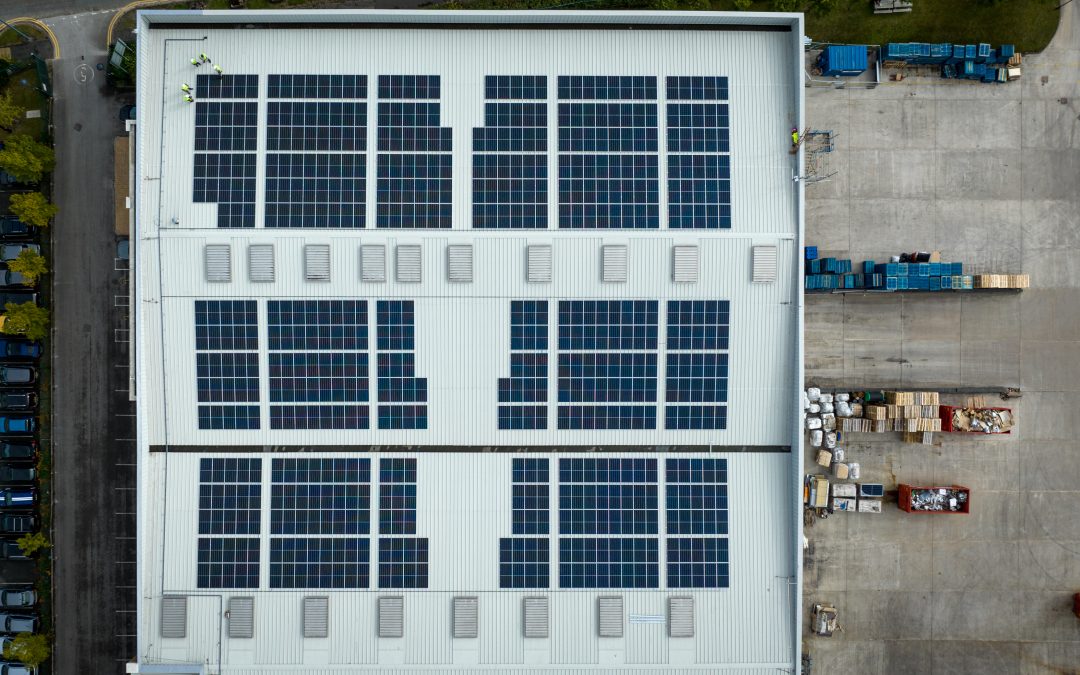
If you manage commercial property, you most likely have a net zero commitment, whether it comes from your fund, your board or your tenants. When weighing where to start, solar is a sensible place to begin. It is measurable, gets you to EPC A faster, can be installed around a working building, and gives you more control over a cost that’s proved hard to predict. This blog sets out how we would move from pledge to plan.
The Gap Between a Net Zero Pledge and a Delivery Plan
A net zero pledge is a worthy ambition, but it is part of the mix of the multiple targets an asset manager has to hit. Alongside it sit rental growth, minimising voids, tenant retention, tightening legislation, investor reporting and protecting the capital value of the asset. A delivery plan must say which assets come first, how each is funded, what the lease allows, and who is responsible once the system is live. And sometimes, particularly in a volatile market, net zero can seem less important.
When portfolios stall in their carbon reduction, it is usually because nobody has worked out where to begin. Starting small can often be the right way to do it, with that first project giving you the template, the data and the confidence to do the next ten.
Why Solar Is Often the Fastest First Step
In our experience, putting solar on the roof is one of the most reliable ways to improve a building’s EPC rating, and on a building with a large roof it can be what takes it up to an A. The rating is carbon-based, so power generated on site counts towards it directly, and a warehouse roof is often big enough to generate a meaningful share of what the building uses. That matters because EPC B is now the target for larger rented buildings by 2031.
A rooftop array can usually be installed around a building that is still in use, so occupiers are not disrupted. The generation and carbon figures are measurable from day one, giving you something concrete to report against your targets, and it can support an improvement in the asset’s EPC rating. Power you generate and use on site is also less exposed to wholesale price movements.
Regulation is moving too. The government has confirmed a target for privately rented non-domestic buildings over 1,000 sqm in England and Wales where cost-effective, with details to follow in secondary legislation. Only about 7% of non-domestic properties are that large. Still, they account for roughly 60% of electricity use and 70% of gas use across the sector, and large industrial and logistics buildings sit squarely in that group. The Solar Roadmap points the same way, aiming for 45 to 47GW of solar by 2030.
Warehouse and logistics roofs are a natural place to look. The Roadmap estimates that the UK’s largest 20% of warehouses alone could support around 15GW of rooftop capacity.
Choosing Which Assets to Start With
Not every roof makes an easy first project, so start where the facts are easiest to establish. A good first candidate has:
- a large, clear roof that you control
- a tenant whose electricity use you can see
- enough remaining lease to support the investment
- a grid connection with room for the system
Real consumption data matters. A system sized from half-hourly use will perform better than one sized from roof area, which is why we set out why warehousing needs a specialist approach to solar in a recent blog.
Check the grid position early, as the network connection can still limit an array sized for the roof, and connection timelines can be long, so it is better to find out before design than after. We help clients navigate this all the time, so rely on your solar delivery partner to assess it.
Check the Lease Position Before You Commit
Start off by checking the lease. Who holds the roof rights and repair obligations, and can the landlord get onto the roof to install and maintain the system? How much term is left, and is there a break clause? You also need to know what happens to a funded system if the tenant leaves or uses less power. A system is built to last 25 years or more, and the lease must cover that. Power purchase agreements and B-rent can help where it can’t, but which one suits depends on the lease.
The government has acknowledged the problem. Its Solar Roadmap commits it to working with UKWA and the wider industry to streamline solar on leased commercial buildings and to develop guidance for landlord and tenant agreements. UKWA’s solar toolkit already sets out how lease obligations, ownership models and PPA structures can work. Whichever documents you use, it is worth agreeing in writing who looks after the system and who is responsible if something goes wrong.
A defined maintenance scope with annual reporting answers part of that, and it is easier to agree before installation than after. A workable scope names what is inspected and how often, how cleaning is handled and charged and when the landlord receives a written report. Our own operations and maintenance scope, for example, covers annual checks on the inverters, AC distribution, mains connection and the PV array itself, with a report to the client within 30 days.
From a First Project to a Portfolio Rollout
This initial project is now your template so it’s important to document it. Make a note of the lease wording that worked, the funding route that suited the tenant and the design standard and maintenance scope you settled on. Then keep track of what the system generates. By the time you reach the second and third projects, you are starting from a working example, not a blank page.
Annual performance reporting gives you generation and carbon figures to measure against your targets, closing the loop between the commitment you made and what has been delivered. When an asset is sold or refinanced, a documented history of maintenance and generation can also be useful evidence.
If you are deciding where to begin, we are happy to talk through a shortlist of two or three assets and what to check on each – please get in touch.